12 practice questions for this chapter, gradeable instantly.
Q1
The speed of distant stars and galaxies can be calculated using
Q2
When the source of sound moves away from a stationary listener, there is an apparent
Q3
In a stationary wave, the velocity of particles of a medium at the nodes
Q4
Beats occur when two waves have
Q5
All of the following produce sound waves EXCEPT
Q6
The resultant displacement at any point due to the sum of displacements of two or more waves is called
Q7
The phenomenon of wave that distinguishes between transverse and longitudinal waves is
Q8
When a listener moves away from a stationary source of sound, then the apparent change in the pitch and frequency of sound for the listener is
Q9
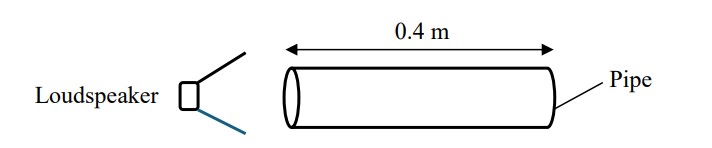
One end closed pipe has a loudspeaker at its open end. A stationary sound wave is formed in the air within the pipe with an antinode at the open end of it, as shown in the given figure. The length of the pipe is 0.4 m. (Note: The speed of sound in air is 343 m/s.) The frequency of sound that produces a stationary wave from the loudspeaker is
Q10
When two tuning forks of nearly the same frequencies are sounded together, a note of alternately increasing and decreasing intensity will be heard. Based on the given description, the note is called
Q11
If a wave has a frequency of 10 Hz, then the time period of the wave will be
Q12
The option which is TRUE about the speed of wave on a string is that speed depends on the